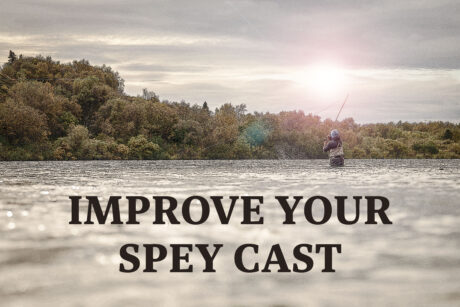
We do a lot of Spey casting at Alaska West and Rapids Camp. We’ve also helped many Spey anglers improve their cast. Whilst working with many anglers on their casting, we have seen many anglers make the same mistakes when Spey casting. Here are the 3 most common Spey casting mistakes we see on a regular basis, and how to correct them, of course!
1. Inconsistent Anchor Placement
Anchor placement is the modest yet important detail that determines whether a cast unrolls with power and precision or collapses in a splash of slack line. Without a good anchor placement, your cast is doomed from the start. The anchor is the portion of the fly line and leader that grabs the water whilst developing the D loop—it provides just enough ‘stick’ to load the rod, building energy for the cast. Too much line anchored, and the line oversticks, killing momentum; too little, and the cast loses tension before the forward stroke. Correct anchor placement and just outside the intended casting path—creates efficient line speed, clean loops, and directional control.
Easier said than done, right? Right. Many suggest visualizing where the fly is relative to your draw. But the length of your tip and leader can vary, which can lead to inconsistent anchor placement. A more consistent way to place your anchor is by focusing on the connection between your head and tip.
2. You’re Going Too Fast
When Spey casting, speed kills your rhythm and momentum. Slow down—let the rod load, feel the flex, and give your line time to do its thing. Hurrying through casts leads to sloppy loops and missed water, but focusing on rhythm, rather than speed, sets you up for those long, silky smooth casts and effortless presentations.
Think of your cast like a pitcher’s windup—smooth, deliberate, and loaded with timing. A great pitcher doesn’t rush the throw; they build momentum, gather power, and release with the perfect delivery. Your Spey cast or even single-hand cast, for that matter, works the same way. Slow down, feel the rod bend, and let the energy travel through every motion. When you wait just long enough for the line to straighten behind you, your forward cast blasts with effortless precision, just like a perfect pitch across the plate.
Try this…once you’ve placed your anchor, give it a 3-second count (one- one thousand, two- one thousand, three- one thousand) before you start your sweep.
3. You’re Dipping Your Tip
Speaking to sweeps, in what seems to be the number one mistake on a lot of bad Spey casts, you’re dipping the rod whilst performing your sweep. Dipping the rod tip to start your sweep to the D-loop is a common tendency for many people. When you start your sweep into a D loop, don’t let that rod tip dip—it’s the quickest way to sabotage a cast before it even takes shape, regardless of how well your anchor is placed. Dropping the tip too low dumps all the tension you’ve gathered and sends your anchor skidding or sticking in the wrong spot. Instead, keep the rod moving on a smooth, level plane as you sweep—feeling the line swing around with slight pressure and controlled momentum. That steady path holds the tension you need for a high, efficient D loop leading to a smoothly accelerating forward stroke that launches your fly exactly where you want it.
How can I tell if I’m dipping or not? Well, the easiest answer to this is to have someone watch you while you make your casts and shoot video. This way, you can see exactly what you’re doing.

Leave a Reply