• Skip to main content
  • Skip to primary sidebar
  • Skip to footer
- Plan Your Next Adventure -

Deneki Outdoors

Alaska | The Bahamas | Chile

  • About
    • Jobs
    • Blog
  • Locations
    • Rapids Camp – Bristol Bay, Alaska
    • Alaska West – Western Alaska
    • Andros South – The Bahamas
    • Rio Salvaje – Chile
  • Air Taxi Service
  • Memberships
  • Search

Bonefish

Mar 22 2021

Deneki Chronicles: Don’t Fish This Fly

Chalk this up under “Things to Consider.”
Fly Fishing for Bonefish Tips
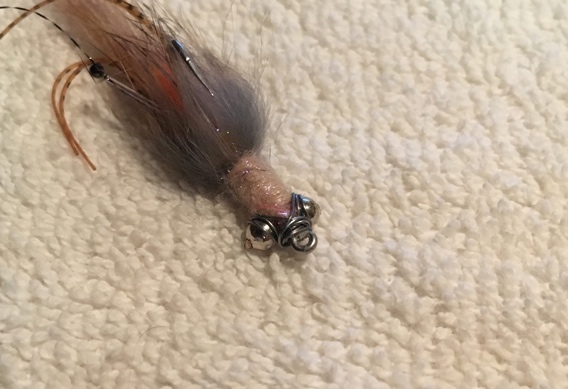
Heartbreaker. Photo: Kyle Shea.

No, we’re not talking about a Gotcha, they work great on South Andros! We’re talking about that subtle brownish discoloration at the back of the fly. That’s a sign of rust, and that’s a bad thing.

While stainless hooks certainly hold up better in saltwater, they are not rust-proof. Rinsing off your flies with fresh water after a day on the flats is always a great idea, but over time salt water can cause the hook to rust under the tight thread wraps of the fly (where a quick rinse doesn’t quite reach). We’ve ‘heard’ of many double-digit bonefish lost due to a broken hook, only to find the slightest discoloration at the breakpoint.

So, before tying your next fly, take the time to look it over and avoid the heartbreak.

More Gear Related Tips

  • 3 Ways to Save Money on Fishing Gear
  • Taking Care of Your Waders – 8 Tips
  • Dry Out Your Gear

Filed Under: Andros South, Gear, Tips Tagged With: Bonefish, flies, gear, storing gear

Feb 15 2021

Deneki Chronicles: 4 Ways to Spook Fewer Bonefish

Spooking Bonefish
Mellow bonefish = happy angler. Photo: Adam Kryder

If you freak out a bonefish to the point where he thinks his life’s about to end, you’re much less likely to get him to eat your fly.

Keep those bonefish mellow, mon!

How To Not Spook Bonefish

  1. Fish lighter flies.  One problem with fly selection in a place like South Andros is that our big fish want big flies, but most big commercially tied bonefish flies are designed for the Florida Keys where deep water is the norm – so they’re way too heavy for our fishery.  Heavy flies make a loud sound when they enter the water.  If the water’s less than 18″ or so deep, stick with bead chain eyes or small lead eye flies.
  2. Cast a little shorter.  If you could choose between too long a cast and too short a cast, too short a cast is almost always better.  If you cast too long, you’re really likely to line the fish, which is really likely to send him looking for Mommy.  If you cast too short (especially if the fish is coming towards you), you might be able to just leave the fly and let the fish swim up to it.  Too short is almost always better than too long.
  3. False cast off target.  If you must make false casts in the vicinity of the fish (the fewer the better!), make sure you’re off to one side or the other.  Making a false cast right over the fish’s head will create a scary shadow (birds eat bonefish), and will spray water on to the surface of the flat (not a natural thing at all).  Keep your false casts at least 15 feet to either side of the fish – or just stop false casting!
  4. Be quiet.  Don’t slosh your feet in the water when you’re wading.  Don’t wear flats boots on the deck of a skiff (squeak, squeak).  Don’t slam the lid of the cooler.  Don’t drop your bottle of Kalik – set it down softly.

More Bonefishing Tips

  • How to Land a Bonefish
  • Selecting Bonefish Flies
  • Hit ’em On the Head

Filed Under: Andros South, Tips Tagged With: Bonefish, casting, flies

Feb 01 2021

Deneki Chronicles: Adjusting Fly Weight on the Water Bonefishing

Adjusting weight of your bonefish fly on the water.
What you’ll need. Photos: Michael Gracie. 

Today we present you with a super clever tip (and some well-deserved snarkiness) courtesy of long-time Deneki pal, Michael Gracie, on how to quickly change the weight of your bonefish fly while on the water.

Take it away Michael!

Adjusting Fly Weight on the Water

The Shea’s Bonefish Buttah has become one of my go-to flats flies. I don’t suggest it just for South Andros, nor do I intimate just for bonefish; it’s a large profile shrimp pattern that has just the right blend of fibers, color, and fish maddening antennae to look alive. And we all know prowling flats critters love alive.

I say this without bias. I mean I don’t even like Kyle Shea. Who would? He gets to spend winters on South Andros Island. Meh. (Reminder to myself to sock him square in the nose next time I see him).

Back on the serious track… Yeah, the Bonefish Buttah kicks it, and its primary value is it looks big but lands softly. It sinks slow, fluttering (and screaming) meaty goodness until it hits bottom and looks for somewhere to hide. Perfect for skinny water. That can also be its handicap.

We’ve all been presented with situations where we are poling along a shallow flat and all of a sudden we happened upon two feet. Fish are sighted, but the fly just doesn’t hit bottom quick enough. So we change flies, something we are loath to do considering we already have something tied on that we’re confident in. You’re not at the tying vise, but this is where having a spool of 0.015 lead wire comes in really, REALLY handy. Here’s how:

  1. Pull three to four inches of wire off the spool.
  2. Start your wrap just below the eye, beginning with the wire around the midway point of its length, and make a few wraps there.
  3. Wind the ends of the wire around each bean chain eye and tuck the ends in close to the body.
  4. With your fingernail, push the wire that has strayed onto the eyes in close to the body.
  5. Put a drop of UV Knot Sense on the wraps.
  6. Finally, wait thirty seconds until the adhesive dries, then cast to a pig in several feet of water. Your special fly will now drop quickly right down in front of its face. Snort snort … hookup!

Quick, simple, effective.. What more could you ask for?
Quick, simple, effective… What more could you ask for?

With this otherworldly brilliant – or maybe just common sense – fly-fishing hack, you won’t need to change your fly the next time the depth changes. The rig should last numerous casts, and one to two fish; not bad for a minute of your time, as well as the peace of mind that you are fishing your favorite fly regardless of depth.

A spool of wire can be had for about four bucks at most any fly shop. About the same cake as I spent per fly to corner the market on Shea’s Bonefish Buttah online last week.

MG signing off (to keep my Buttahs tied on, no matter how deep the water is).

More Bonefishing Tips

  • Selecting Bonefish Flies
  • Rub Your Fly in the Sand
  • Pivot Slower

Filed Under: Andros South, Tips Tagged With: Bonefish, flies

Jan 09 2021

Tribute to Robert “Bob” Veverka

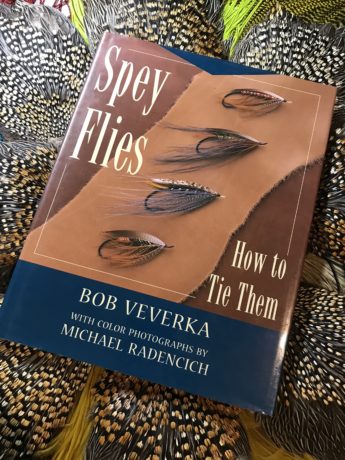
Sadly, on January 3, 2021, the fly fishing community has lost one of the most prolific designers and fly tyers. Bob Veverka, was a creative, strategic, and innovative fly tyer. With two of the most coveted books in the fly tying world, Spey Flies: How to Tie Them and Innovative Saltwater Flies, Bob left a huge impression on fly fishing. Whether Spey or saltwater flies Bob either designed or had a hand in designing the most elegant, graceful, and effective flies ever tied.

Spey Flies: How to Tie Them Photo Credit: Kevin Foley

Below is the announcement via Bob’s Facebook page:

“It is with a heavy heart that I have to report the loss of Robert “Bob” Veverka on January 3, 2021. Bob lost his fight with cancer after his sudden diagnosis in November 2020 with his family beside him while in a hospital in Burlington, Vermont. Bob was a master fly tyer and avid fisherman as the people that knew him will tell you. The fly tying and fishing community are at a great loss with his passing. Bob requested no services and early in his diagnosis, he wished for one more fishing season. Unfortunately, this didn’t occur. We will be taking Bob’s ashes to Martha’s Vineyard in the fall to fulfill his last wish. So goodbye for now big brother, we will miss you. Fish on.”

Dave Veverka via Facebook

Below is a post about Bob’s Mantis Shrimp. It is a classic fly, that is effective. Bob, we’ll be thinking of you every time we use this fly and the many others you have created. Our hearts, and prayers go out to the Veverka family.

-Team Deneki Outdoors

Featured Photo Credit: Kevin Foley


Classic fly patterns are classics for a reason. They simply work. Bob Veverka’s Mantis Shrimp is one of those patterns. Classic flies, like classic cars, can be modified, painted a new color, add or take away parts to match personalties. Some would say, “if it ain’t broke, don’t fix it.” Whichever way you lean, this classic fly works for a variety of saltwater fish. In this original post, we didn’t include a video. Intheriffle.com produced a great instructional video for this classic fly. Let us know what you think.

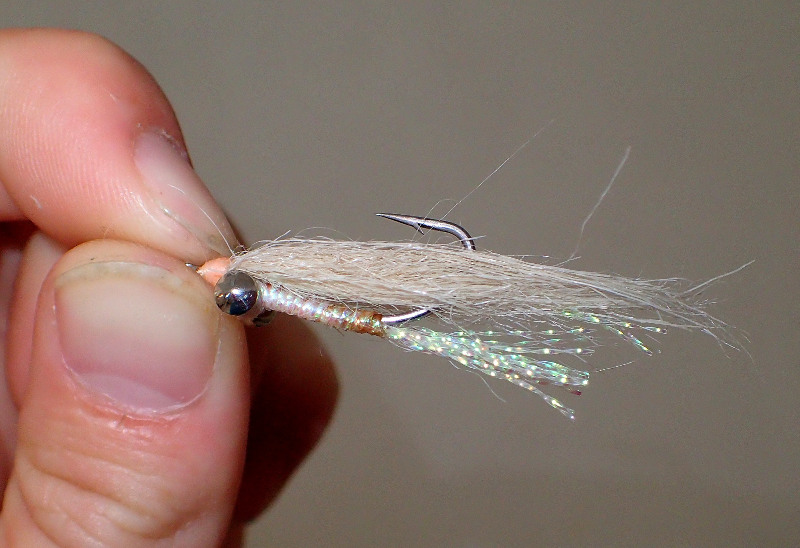
You need this one in your box.  Photo: Bob Veverka
You need this one in your box. Photo: Bob Veverka

One of our go-to flies on South Andros Island has always been Bob Veverka’s Mantis Shrimp.  We were pretty excited a couple of weeks ago when we got a response to one of our email newsletters from…Bob Veverka.

We immediately began twisting Bob’s arm for some information about the design and construction of his fly, and here’s the result.  Thanks Bob!

Background

Several years ago while sitting at my tying desk contemplating an upcoming trip to the Bahamas, I looked over my fly box filled with all the standard Bonefish patterns. I felt something was missing, something different, a fly of my own design. I thought about all the stories I heard about these elusive, fly-pattern-wary bonefish. They eat shrimp so my idea was to tie a shrimp pattern that would entice the smartest ghost on the flat.

While tying the first Mantis Shrimp I thought back to a TV program I saw that included a clip on the behavior of Mantis shrimp. Most noticeable to me was the movement of their many appendages and their eyes. I feel that movement incorporated in your flies displays life,  and to a hungry bonefish, dinner.

Design

When designing flies for predator fish I feel it’s best to match the prey they are feeding on. Most important are the size, shape, and color. Size can easily be changed or matched by the size of the hook you tie on. Shape or silhouette must be built into a pattern so it resembles the prey you wish to represent. It should be a fly that’s easy to tie with basic materials, lands lightly sinks fast, and most important catches fish. The bulky body on my Mantis pattern makes it land softly, and the bead chain eyes bring it to the critical zone.

To simulate a few key elements, small accents are added to our flies that make them look more realistic and lifelike. These features include translucent materials that reflect light, flash materials for attraction, legs that move and emulate life, and the addition of eyes that are a predominant feature on all shrimp.

For the color of my mantis shrimp, I felt you can’t go wrong with a light tan or sandy color to match the environment. While tying up some false albacore flies with Craft-fur for the wings I noticed that the material contained shorter fibers that were pulled out and discarded. At the time I thought this would make a beautiful translucent dubbing material. With this thought, it was only natural that I used tan Craft-fur for the tail and dubbed body on my Mantis shrimp pattern.

One notable feature of all shrimp is their eyes. Eyes on real shrimp move and make them look like a creature from another planet. I have not figured out how to incorporate this component into a fly pattern so I used the standard burnt mono eyes.

For the carapace, I tied in a tuft of tan rabbit fur. This material looks bulky in the water and displays the most enticing movement. Even at rest, this material quivers with life. A slight current or a strip on the line will make this material pulse like no other.

Perhaps the most important feature of my Mantis Shrimp pattern is the legs and the way they are tied on. Most bonefish flies that include legs have them tied in all together in one area on the fly. To me, this looks like a clump of legs or a dead shrimp. I wanted my pattern to simulate life so each leg had to be separate and act as a natural shrimp with lots of movement. It takes a little extra time to tie a fly in this manner but I feel this is what makes this fly so distinctive and deadly on wary bonefish. Over the years it has become one of the go-to patterns used in the Bahamas and a standard in every fly box that travels to this area.

Recipe for Bob Veverka’s Mantis Shrimp

  • Hook – Size 2 -6
  • Weight – Bead chain or small dumb-bell eyes
  • Tail – Tan Craft-fur, same length as body. 2 strands of flash material can be added.
  • One set of rubber legs are added at this point, burnt mono eyes and a tuff of tan rabbit fur
  • Body – One turn of tan Craft-fur dubbing then another set of rubber legs, followed by another turn of tan dubbing and another set of rubber legs, 3 sets in all.
  • Then dub the rest of the body and tie off. If you don’t have craft-fur for the body material there are many new dubbing materials that can be substituted.

More On Flies for the Bahamas

  • 7 Reasons This Fly Works on South Andros
  • Barracuda Flies
  • 5 Favorite Flies for South Andros
Video by Intheriffle.com

Filed Under: Andros South, Fly Tying, General, News Tagged With: Bob Veverka, Bonefish, flies, fly tying

Nov 10 2020

Bonefish Fly Selection for South Andros

Bonefish Fly Box by Louis Cahill Photography
You could throw a little pink in there too. Photo: Louis Cahill

We have quite a few posts on our blog about bonefish flies, but somehow we haven’t addressed head-on the topic of “I’m putting together a box of bonefish flies for my trip to Andros South – what should go in it?”  Today we answer that question!

Let’s keep a few things in mind as we get started.

  • Most of the time, our bonefish aren’t that picky.  Lots of different patterns work, so the majority of our sample box is going to be made up of types of patterns, groups of colors, and ranges of weights – as opposed to specific patterns that you just must have.
  • That being said, there are a couple of patterns that we think you just must have, so we’re going to include them.
  • We like having some lighter flies for lighter-colored bottoms, and some darker flies for darker-colored bottoms.
  • It’s really important to have a range of weights for different water depths.  We fish a lot of shallow water so most of our flies will be pretty light.
  • We fish pretty big flies most of the time, so most of our flies might be bigger than what you’d think if you’ve chased bonefish elsewhere.

Your Bonefish Box for South Andros Island

OK, let’s build a box!  We’ll try to keep it to a somewhat reasonable 40 flies – plenty for a week-long trip.

General Purpose Go-To Patterns

  • 8 #2 Charlie/Gotcha/Shrimpy-type flies in white or light tan, with bead chain eyes or very small lead eyes, mostly with legs of some sort – example
  • 8 #2 Charlie/Gotcha/Shrimpy-type flies in darker tan or brown, maybe with some dark green, with bead chain eyes or very small lead eyes,  mostly with legs of some sort

Shallower Water

  • 4 #4 Charlie/Gotcha/Shrimpy-type flies in white or light tan, with small bead chain eyes, mostly with no legs
  • 4 #6 Charlie/Gotcha/Shrimpy-type flies in white or light tan, with small mono eyes or no eyes and no legs

Deeper Water/Big Fish/West Side

  • 4 #1 or #1/0 Charlie/Gotcha/Shrimpy-type flies in white or light tan, with lead eyes, all with legs of some sort
  • 4 #1 or #1/0 Charlie/Gotcha/Shrimpy-type flies in darker tan or brown, maybe with some dark green, with lead eyes, all with legs of some sort

Must Have Because They Work Really Well

  • 4 #2 Veverka’s Mantis Shrimps
  • 4 #2 or #1 Peterson Spawning Shrimps

And there you have it!  So many different types of flies work in our fishery that there are many great patterns that didn’t make our box (crab patters and baitfish patterns to name a couple).  But show up with a box like this one, and you’ll be really well-equipped for a week chasing bonefish on South Andros.

More on Gear for South Andros

  • How to Pack for Your Day of Bonefishing

Filed Under: Andros South, Gear Tagged With: Bonefish, flies

  • « Go to Previous Page
  • Page 1
  • Page 2
  • Page 3
  • Page 4
  • Interim pages omitted …
  • Page 12
  • Go to Next Page »

Primary Sidebar

All Blog Posts

Recent Posts

  • Fishing September at Rapids Camp Lodge: The Season’s Grand Finale(ish)
  • Spots Are Going Fast at Alaska West Lodge, And No, That’s Not Just a Sales Line
  • Pebble Mine: Where the Battle Stands Now
  • The Jerry French Lamprey Fly Tying Tutorial: A Fly for People Who’ve Given Up Pretending Fish Are Picky
  • The Alaska Trout One-Two Punch That Delivers

Top Posts

All About Spey

All About Trout

All About Bonefishing

All About Gear

Subscribe

Footer

  • Facebook
  • Instagram

Photography by Peter Viau, Tosh Brown, Abe Blair, Kyle Shea and Kara Knight.

Contact Information

Headquarters:
6160 Carl Brady Dr.
Anchorage, AK 99502

U.S. Information and Reservations:
800-344-3628

International Information and Reservations:
+1 907-563-9788

info@deneki.com

Locations

Rapids Camp
King Salmon, Alaska

Alaska West
Kanektok River, Alaska

Andros South
South Andros Island, The Bahamas

Rio Salvaje
Puerto Montt, Chile

Air Taxi
Alaska

Copyright © 2026 · Deneki Outdoors · Privacy Policy · Site by 21 Designs

We use cookies to ensure that we give you the best experience on our website. If you continue to use this site we assume that you are okay with it.