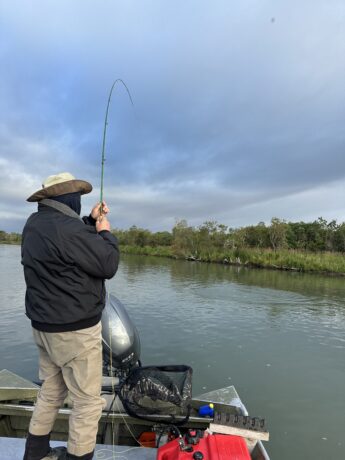
At Alaska West Lodge, we spend a lot of time drifting down the Kanektok River in a boat. It’s a beautiful experience, the scenery is world-class, the Rainbows are amazing, and there is no shortage of ways to embarrass yourself in front of a guide who has seen it all.
Whilst drifting, one technique we use constantly is called “bangin’ the banks.” The name sounds more aggressive than it is. Essentially, you’re casting as close to the bank as possible while drifting downstream, targeting the Rainbows holding tight to the edges. It’s a fast-moving game, like a shooting gallery, except the targets are invisible, the gallery is moving, and you’re the one who looks foolish when you miss, and you will miss.
A few tips to help you not look foolish while bangin’ the banks.
- Anticipate your target. They say when driving, always look forward to where you’re going. The same rule applies whilst drifting. The Kanektok doesn’t slow down, so you can think. Keep your eyes moving downstream and identify your next target before you’re on top of it. When you spot a money seam or undercut bank that you absolutely cannot miss, be patient and time the cast properly, even if it means passing on the mediocre water upstream of it. Rushing the cast and putting your fly in a root wad or tree is not a strategy. It is, however, a very common one.
- Cast slightly downstream. Angle your cast slightly downstream rather than straight across. This gives the fly a moment to sink, lets you get a mend in, and perhaps most importantly, it keeps you looking forward like someone who knows what they’re doing. If you find yourself casting behind the boat, your window has closed. Leave that water for your partner in the stern and try to appear as though that was always the plan.
- Keep the fly away from the boat. The fish are tight to the bank, holding under overhanging vegetation, waiting for something edible to drift by. Cast there. Make a mend, give the fly four or five solid strips, then pick up and put it back on the bank for the next target. If you strip the fly all the way back to the raft, it’s now deep in the water column and requires extra false casts to get it airborne again. Every false cast is a moment your fly is not in the water. Every moment your fly is not in the water is, statistically speaking, it is scored as a missed fish. Yes, we’re counting.
- Roll cast the fly to the surface. If the fly has gone too deep to cleanly pick up into a backcast, don’t try to muscle it out of the water past your ear. Roll cast it forward until it rises to the surface, then make your backcast from there. The Kanektok guides have seen the alternative. It is not pretty, and it sometimes requires a brief medical break. Unless you want another self-induced piercing.
- Choose a line that loads quickly. While on the drift, every second counts. A line that loads your rod in one or two false casts will serve you far better here than whatever you’ve been using on a spring creek in Montana. Lines that technically “over-line” your rod are worth considering. The casting purists can file a formal complaint with someone who is not currently floating past prime holding water. No matter how slow you think you’re going, you’re going faster than you think.
- Keep the rod tip close to the water. While stripping a streamer, keep the rod tip low and as close to the surface as you can manage. This reduces slack between strips, keeps you connected to the fly so you actually feel the strike, and puts the rod in a much better position when it’s time to pick up and recast. A high rod tip while stripping is a great way to miss the eat of your week and spend the next ten minutes coming to terms with it, and your fishing buddy will tell everyone else about the one you missed back at camp.

Leave a Reply